Selecting a sprinkler system for large fields requires balancing coverage, water pressure, and field conditions. This guide outlines key evaluation criteria, common design mistakes, and a decision process for professional buyers to choose reliable irrigation equipment.
- Assess field topography and soil drainage before sizing the sprinkler system.
- Match sprinkler drop rate to crop water use and soil infiltration capacity.
- Verify pipe material, joint quality, and control systems for long-term reliability.
- Review maintenance access and winterization plans to reduce downtime.
Start With Field Data and Water Supply
A large field is not a single uniform surface. Slope, soil type, crop rotation, and drainage patterns all change how water moves once it leaves the sprinkler. Before selecting any equipment, collect a soil map, a field contour profile, and a reliable water supply figure. The supply figure must include the maximum draw rate during the peak season, not just the average annual yield. If the local authority restricts pumping during heat waves, the design must account for that lower flow rather than the theoretical maximum of the aquifer.
Buyers often underestimate the distance from the source to the farthest lateral line. Every meter of pipe adds friction loss. Every elevation change changes pressure. If the water source is a well or a river intake, the pump curve must be checked against the system demand. A system that works in a flat sandy field will fail in a clay bottom with a two percent slope. In the clay, the soil accepts water slowly, so the spray must hang over the field longer to achieve infiltration. This increases the static pressure at the nozzles and raises the friction loss in the mainline. The pump must be sized for this worst-case scenario.
The first step is a simple site walk. Note the position of power lines, access roads, and existing ditches. Note where the soil compacts near the center pivot or fixed line. These details determine where the irrigation equipment will sit and how it will be serviced. Look for hardpan areas that may prevent the wheel tracks from gripping. Identify low points where water might pond after a heavy rain. If the field has a drainage ditch that runs along one side, the irrigation layout must account for the water already present in the profile. Ignoring these ground conditions leads to uneven application and premature component failure.
Evaluate Coverage and Drop Rate
Coverage is measured in how evenly water reaches the soil, not just how far the spray travels. A large field needs a uniform application. Gaps between spray patterns create dry spots. Overlapping patterns waste water and increase runoff. The drop rate, measured in millimeters per hour, must match the crop stage and soil infiltration. For example, a young maize crop with a shallow root system needs a low, frequent application. A mature crop with deep roots can handle a higher volume in a single cycle.
For row crops, a higher drop rate is often needed to keep the soil wet without saturating the surface. For pasture or forage, a lower drop rate may be enough to avoid leaf wetness and fungal pressure. The sprinkler system should allow for adjustment. Fixed heads with fixed nozzles are cheaper but less flexible. Adjustable heads cost more and need regular inspection for clogging. If the field is used for both high-value vegetables and lower-value forage, a system with interchangeable nozzles or adjustable heads provides the necessary flexibility. A system designed only for one crop type will require expensive modifications when the rotation changes.
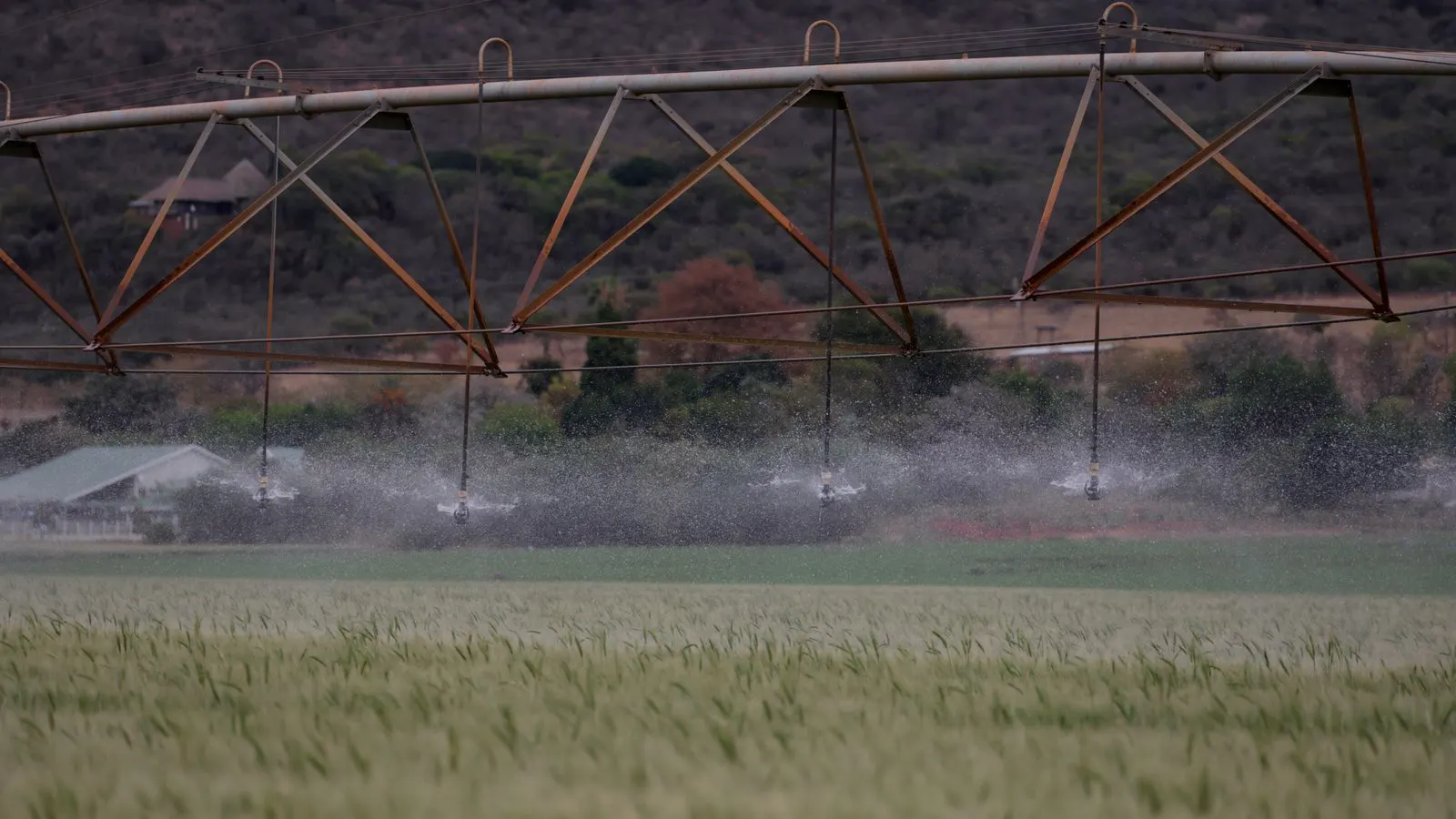
Check the nozzle spacing. If the nozzles are too far apart, the spray cones do not merge properly. If they are too close, the cost per acre rises quickly. A good rule is to match the nozzle spacing to the crop row spacing and the field width. This keeps the application uniform and the equipment count manageable. Consider the wind conditions of the region. In high-wind areas, larger droplets are needed to travel the distance without drifting. Smaller droplets break up in the air and land on neighboring fields or evaporate before reaching the soil. The nozzle selection must therefore be a function of both the field geometry and the local weather profile.
Inspect Pipe, Pivots, and Drive Systems
The mainline and lateral pipes carry the water. Material choice matters for pressure, corrosion, and handling. Polyethylene pipe is common for laterals because it is flexible and cheap. Steel or HDPE is often used for mains where pressure is high. The pipe diameter must be calculated for the flow rate. A small pipe will choke the flow and drop pressure at the far end. If the pressure drops too low, the spray pattern becomes conical or the nozzles do not reach the full radius. This creates a shadow zone in the middle of the sector.
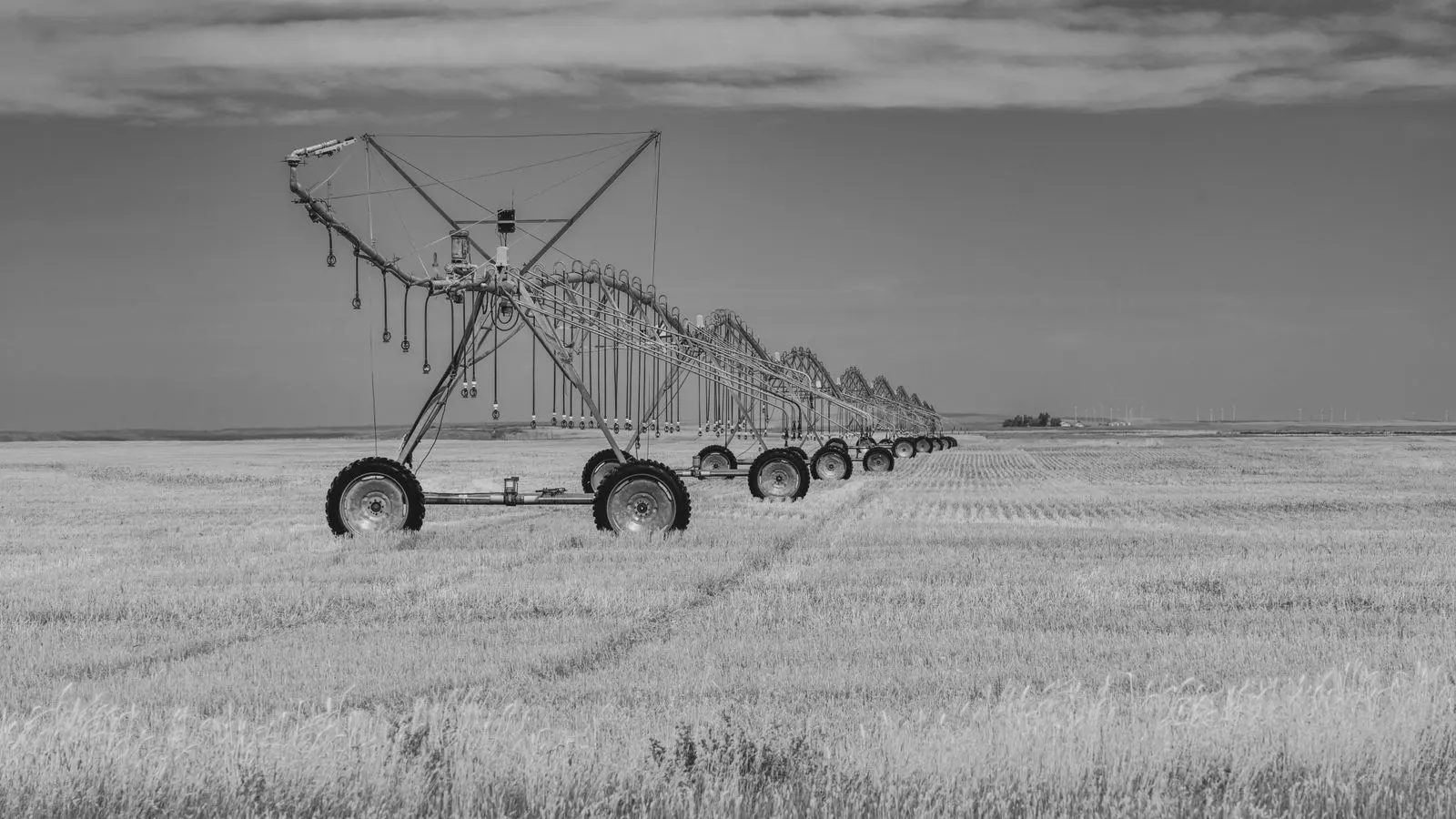
For center pivot systems, the tower design, wheel condition, and drive motor matter. The drive motor must handle the torque needed to turn the span on a heavy load. If the motor is undersized, the pivot slows down or stalls. This leaves part of the field dry and another part overwatered. Check the gear ratios and the controller. A modern controller with GPS guidance helps maintain consistent speed, but the mechanical components still need routine greasing and alignment. The wheel tracks must be checked for wear. Uneven wear causes the pivot to drift off its center, leading to overwatering on the inside of the turn and dryness on the outside.
Fixed line systems use valves and manifolds. Each valve must open and close without sticking. Manual valves are simple but labor intensive. Automatic valves require sensors and a controller. The choice depends on field size and labor availability. A large farm with multiple fields may prefer automatic controls to manage water use by zone. In a fixed line, the manifold design determines how quickly a section can be isolated. If a pipe bursts between two valves, the water must be shut off to protect the rest of the system. A well-designed manifold allows for quick isolation with minimal labor.
Review Control Systems and Data
Modern irrigation equipment often includes sensors and controllers. Soil moisture probes, weather stations, and flow meters give real-time data. This data helps adjust the run time and detect leaks. But the sensors must be calibrated and maintained. A dirty probe gives false readings. A blocked flow meter misses a broken pipe. Soil moisture probes are particularly sensitive to their location. If the probe is placed near a root zone that has dried out, it will signal for irrigation even if the surrounding soil is still moist. The probe must be placed in a representative area of the root zone and checked regularly against manual soil samples.
The control interface should be accessible from the field office or the truck cab. If the system is too complex, operators will switch to manual mode and lose the benefits of automation. Keep the control logic simple. Set default run times based on crop stage. Use the data to override when the weather changes. The goal is to reduce guesswork, not to add another screen to watch. A simple interface that shows the current sector, the run time remaining, and the soil moisture level is often more useful than a complex dashboard with multiple data streams. The operator needs to know if the system is working and if it needs intervention.
Check the power supply. Remote fields may need solar panels or a dedicated circuit. The controller needs a stable voltage. Brownouts can damage the electronics. A simple UPS or a clean power line prevents unexpected shutdowns during a critical irrigation window. Solar power is a common solution for remote pivots. However, the battery bank must be sized for the controller and any additional sensors. If the batteries are undersized, the system may shut down during the evening hours when the sun is not available to recharge them. A backup power source is a critical component of the reliability plan.
Plan for Maintenance and Winterization
A sprinkler system is a mechanical device. It will wear. The nozzles clog. The pipes crack. The drive belts stretch. The valves stick. Maintenance is not a cost to avoid. It is a budget line that protects the investment. Neglecting maintenance leads to sudden failures during the most critical periods of the growing season. When a pump fails in mid-July, the crop is already in a high-stress period. The cost of emergency repair and the loss of yield far exceed the cost of routine service.
Build a routine into the season. Inspect the nozzles at the start of the season. Replace any that are chipped or worn. Check the pipe joints for leaks. Listen for unusual noises from the pump. Test the valves and the safety shutoff. Keep a spare kit in the truck. A few minutes of spare parts can save a day of waiting. The spare kit should include common nozzles, washers, and a small selection of pipe fittings. It should also include the specific parts for the drive system, such as belts or chain links. Having these items on hand allows for immediate field repairs without waiting for a delivery.
Winterization is critical in cold climates. Air blowouts and drain valves remove the water. If water remains in the pipes, it freezes and expands. The burst pipe can take out a whole sector of the field. The cost of a repair in the spring is far higher than the cost of a proper drain-down in the fall. The drain-down process must be thorough. Starting from the farthest point of the system and working toward the source, all water must be expelled. Residual water in the bends and low points is the most likely source of springtime failure. A systematic approach to draining prevents the random failures that plague poorly maintained systems.
Compare Costs and Total Value
Do not buy on the sticker price alone. A cheaper sprinkler system may cost more in water, labor, and repairs. Compare the total cost of ownership. Include the price of the equipment, the installation, the annual service, and the water savings. A system with a higher initial cost but better coverage and lower water use may pay for itself in two or three seasons. The water savings are often the largest factor in the long-term value. A system that applies water more uniformly uses less water per unit of crop growth. This reduces the pumping costs and the environmental impact.
Ask the supplier for a layout drawing. Verify the pipe sizing and the pressure at the farthest point. Ask for the expected lifespan of the main components. Ask for the warranty terms. A short warranty on the drive motor is a red flag. A long warranty on the nozzles is expected. The contract should be clear on who handles installation and who handles the first service call. The installation quality is as important as the equipment quality. Poorly installed pipes will leak. Poorly aligned pivots will wear out quickly. The supplier should guarantee the installation or provide a clear maintenance schedule to ensure the system performs as specified.
Decision Checklist
Use this checklist to confirm the selection.
- Field topography and soil type are mapped and documented.
- Water supply and peak demand are verified.
- Drop rate and coverage are matched to crop needs.
- Pipe material and diameter are calculated for pressure loss.
- Drive system or valve control is rated for the field size.
- Sensor and controller power is stable and accessible.
- Maintenance routine and winterization plan are in place.
- Total cost of ownership is compared against at least two options.
A well chosen sprinkler system runs quietly and evenly. It fits the field, not the other way around. The best equipment is the one that matches the specific conditions of the farm and can be maintained by the people who run it.
Frequently asked questions
What is the first thing to check before buying a sprinkler system?
Check the water supply and the field topography. The system must match the available flow and the slope of the land.
How do I know if the drop rate is correct for my crop?
Match the drop rate to the crop stage and soil infiltration. Row crops usually need a higher rate than pasture.
Can I use the same sprinkler system for multiple crops?
Yes, if the drop rate and coverage are adjustable. Fixed heads are less flexible than adjustable ones.
What is the biggest maintenance mistake?
Skipping the winterization. Frozen water in the pipes can cause costly burst failures in the spring.
Should I buy the cheapest system available?
No. Compare the total cost of ownership. A cheaper system may cost more in water and repairs over time.