Diesel tractors handle heavy, long-duration field work with established service networks. Electric units suit smaller plots, controlled environments, and specific load cycles. The right choice depends on tractor horsepower, battery or fuel range, local service support, and intended tasks.
- Diesel tractors remain the standard for high-horsepower, long-duration field work.
- Electric tractors offer lower operating costs and reduced emissions in suitable applications.
- Battery range and recharging logistics shape the practical daily workflow.
- Service parts availability and local dealer support affect total cost of ownership.
- Match the power source to the task, plot size, and existing farm infrastructure.
What is the core difference between diesel and electric tractor power
The difference is not just fuel. It is how power reaches the wheels, how long the machine can work, and what happens when something goes wrong.
A diesel tractor burns fuel in an internal combustion engine. That engine drives a hydraulic system, PTO, and transmission. The fuel tank determines the working window. When the tank is low, the machine stops until refueled.
An electric tractor uses a battery and an electric motor. The battery stores energy and releases it through the motor. The working window is defined by battery capacity and recharging time. When the battery is low, the machine stops until recharged.
That change in energy source changes the maintenance, cost, and operating style of the machine.
How do they compare in everyday field work
| Option | Best for | Limitations |
|---|---|---|
| Diesel tractor | Heavy field work, long days, high horsepower | Fuel cost, emissions, higher maintenance |
| Electric tractor | Small plots, orchards, controlled environments | Battery range, recharging time, charging infrastructure |
| Diesel with hybrid assist | Mixed workloads, reduced fuel use | Higher upfront cost, complex service |
| Electric with swappable battery | Short cycles, fixed sites | Battery swap logistics, limited range |
| Diesel with electric PTO | PTO-heavy tasks, lower PTO fuel use | Engine still required for main power |
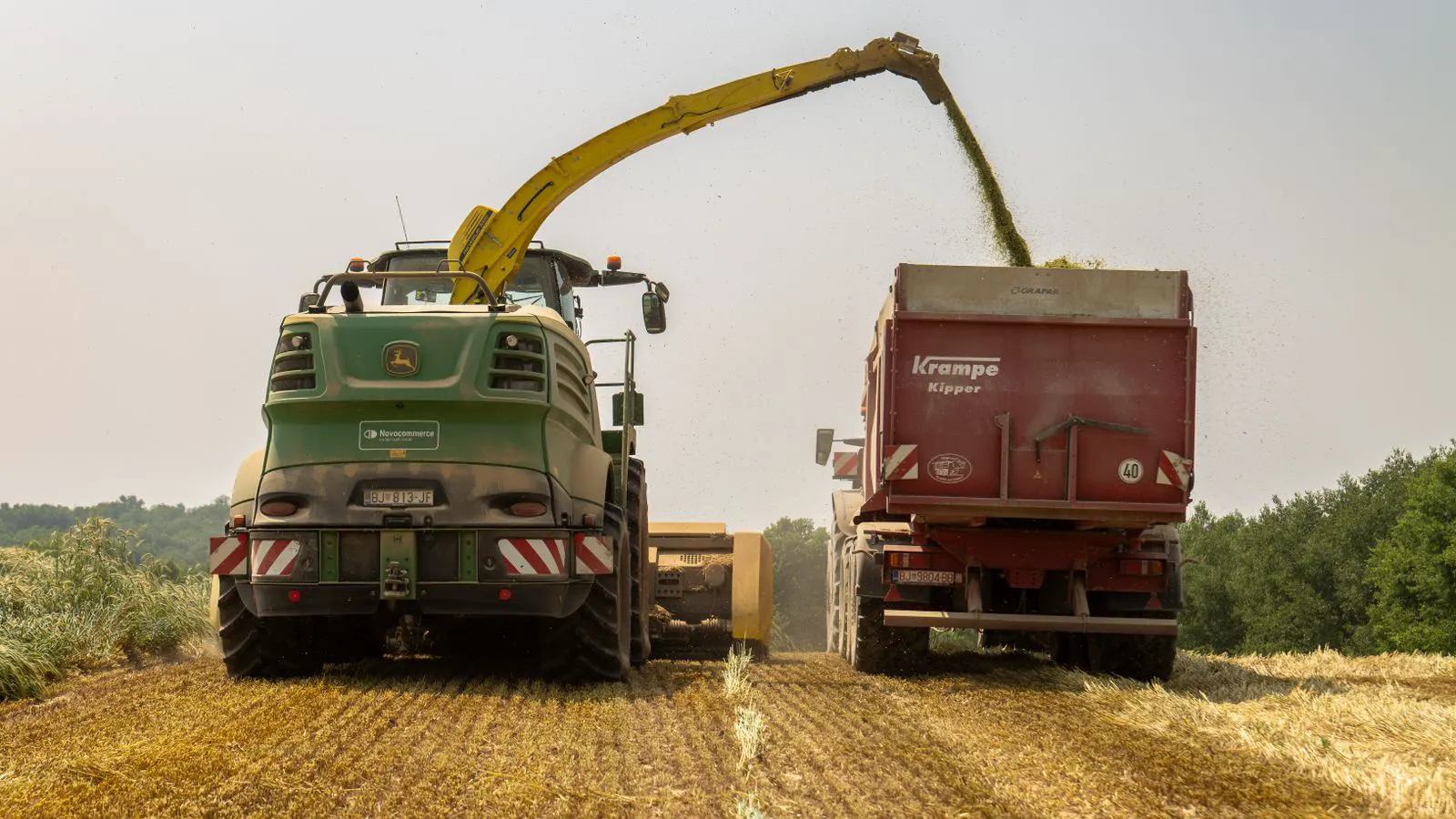
A diesel tractor is often the default for large grain fields, row crops, and heavy implement pulling. The engine provides torque across a wide speed range, and fuel can be refueled quickly at a farm tank or station.
An electric tractor works well where the load is predictable and the work area is compact. A vineyard, nursery, or small dairy farm may run a tractor for a fixed number of hours per day. The machine can return to a charging point at the end of the shift.
The key question is the daily duty cycle. If the tractor runs for many hours across multiple fields, diesel usually fits better. If the tractor moves between a fixed set of tasks and returns to a base point, electric can be practical.
What does the operating cost look like over time
Fuel cost, electricity cost, and maintenance cost all matter.
A diesel tractor needs fuel every few hours of work. The price per liter or gallon is set by the local fuel market. A large field day can use a significant amount of fuel.
An electric tractor draws power from a grid or on-site charging source. The cost per hour depends on the electricity rate, battery efficiency, and the tractor’s energy draw. In many cases, the electricity cost is lower than diesel cost for the same task, but the total picture includes charging infrastructure.
Maintenance differs too. A diesel engine has moving parts, filters, oil, coolant, and exhaust systems. These need scheduled service. A typical maintenance item includes the engine oil filter, air filter, coolant flush, and injector cleaning.
An electric tractor has fewer moving parts. There is no engine oil change. There is no fuel system. The main wear items are the battery, motor, and electrical components. Battery replacement is the major long-term cost.
The buyer should build a simple cost model. Include fuel or electricity, scheduled service, major components, downtime, and recharging or refueling time. The machine with the lower sticker price can end up more expensive over five or ten years.
Which power source fits different farm types
Large row crop operations usually favor diesel. The tractor needs high horsepower, long range, and the ability to work across multiple fields in a single day. Refueling is fast, and service parts are widely available.
Small to mid-size farms may find an electric tractor useful. A market farm, dairy, or poultry operation may run a tractor for a set route. The machine can charge at night and run in the morning. The lower noise and emissions can be a plus in tight farm layouts.
Orchards and vineyards are common electric use cases. The rows are narrow, the work is repetitive, and the machine can be charged at the block entrance or a fixed point. A diesel tractor can work in the same field, but the electric version can reduce emissions inside the canopy.
Greenhouse and controlled environment work is also suited to electric. The space is enclosed, ventilation matters, and the machine runs short, repeated cycles. An electric tractor or smaller electric utility unit can fit better than a diesel unit.
What maintenance does each require
Diesel tractors need a regular maintenance schedule. The engine, transmission, hydraulic system, and exhaust system all have service intervals. A common set of checks includes engine oil, coolant, air filter, fuel filter, and hydraulic fluid. The PTO and driveline also need periodic inspection.
Hydraulic leaks are a common issue on any tractor, diesel or electric. The cause can be a worn seal, a cracked fitting, or a loose connection. The fix is usually a specific seal or hose. The cost depends on the part and the labor to reach it.
Electric tractors need a different set of checks. The battery, motor, and power electronics need monitoring. Battery health can be checked through voltage, capacity, and internal resistance tests. The cooling system for the battery and motor must be kept clean and functional.
Both types need tires, brakes, steering, and electrical systems. The difference is the powertrain maintenance. A diesel machine has more moving parts to service. An electric machine has fewer mechanical parts but a high-value battery that must be managed.
How to decide between diesel and electric
Use the duty cycle as the first filter. Ask how many hours the tractor runs each day, how many fields it crosses, and whether it can return to a charging point.
If the answer is long days and multiple fields, diesel is the safer choice. The fuel system and engine are built for that work. The service network is mature.
If the answer is short cycles and a fixed base, electric is worth testing. Run a trial period. Measure actual energy use, recharging time, and task completion. Do not rely only on the manufacturer’s range claim. Field conditions, implement load, and operator habits change the real range.
The buyer should also check the local support situation. A diesel tractor can be serviced by many dealers and shops. An electric tractor may require a specialized dealer or a limited service network. If the nearest service is far, downtime can become a real cost.
Consider the implement. Some heavy implements need high PTO power and consistent torque. Diesel can deliver that reliably. Electric can too, but the battery must be sized for the load. A large PTO implement can drain a battery quickly.
Common mistakes buyers make
The first mistake is comparing horsepower without looking at duty cycle. Two tractors with the same horsepower can have very different running costs and practical range.
The second mistake is ignoring recharging time. A battery may have enough capacity for the day, but the charging station may not be fast enough to return the tractor to work before the next shift.
The third mistake is assuming the local service network is available. If the electric tractor fails in the field, the buyer needs a plan. A diesel tractor can usually be serviced locally. An electric tractor may need a specialist.
The fourth mistake is not checking the power supply. An electric tractor needs a reliable charging source. The farm power system must handle the load. If the farm grid is weak, the charging time can be much longer than expected.
The final mistake is buying the machine before testing it on the actual implements. The buyer should run the tractor with the real load, on the real field, for a full season if possible.
Frequently asked questions
Can an electric tractor replace a diesel tractor on a large farm?
It depends on the daily work. Large farms with long field days and high horsepower needs usually fit a diesel tractor better. Electric tractors can work well for smaller or more fixed operations.
What is the biggest cost difference between diesel and electric tractors?
Diesel has higher fuel and engine maintenance costs. Electric has lower operating energy costs but a larger battery replacement cost and more specialized service.
How much recharging time should a farm plan for?
Plan for the actual charging station speed and battery capacity. Some systems charge in hours, while others take longer. The farm should match the charging window to the work schedule.
Which power source is easier to maintain?
An electric tractor has fewer moving parts and no engine oil or fuel system. A diesel tractor has a well-known service schedule with widely available parts.
Is an electric tractor better for small farms?
It can be. Small farms with short routes and fixed work areas can benefit from lower energy costs and less noise. The buyer should check the duty cycle and charging access.