Determine grain tank capacity by calculating field size, transport logistics, and crop yield to minimize stops. A larger tank reduces driver time but increases machine weight and fuel consumption. Match the size to your specific harvest profile.
- Calculate required tank volume based on expected yield and haul distance to avoid excessive transport stops.
- Larger grain tanks reduce stops but increase machine weight, fuel use, and potential field compaction.
- Consider the loader truck capacity and unloading time to balance tank size with operational workflow.
- Factor in crop type, moisture, and density variations when selecting the final capacity.
- Review the machine's weight limits and structural support for the selected tank size.
Calculating the Right Volume for Your Field
The grain tank capacity of a grain harvester is a direct function of your field size, expected yield, and the distance to the nearest unloading point. A simple calculation starts with the area of the field in hectares or acres, multiplied by the expected yield per unit area. This gives you the total expected grain in the field. From that total, you determine how much grain fits in the tank. The result is the number of full tank cycles needed to empty the field.
A common mistake is choosing a tank based only on the maximum size available. Operators often assume that a larger tank is always better. This is not true. A massive tank that holds too much grain for the field size will sit half-empty for most of the cycle. The weight of the grain adds strain to the machine, increases fuel consumption, and may cause the combine to sink deeper into soft ground. A smaller tank that fills quickly may require more stops, but it keeps the machine lighter and more maneuverable.
Consider the shape and layout of your fields. Long, narrow fields may benefit from a larger tank because the haul distance to the unloading point is greater. A compact, square field with a loading point near the center may work better with a smaller tank. Map out your fields before buying. Mark the unloading points. Measure the distances from the header start to the unloading spot. These measurements will inform your tank size decision more than any manufacturer brochure.
The Impact of Transport Stops on Daily Output
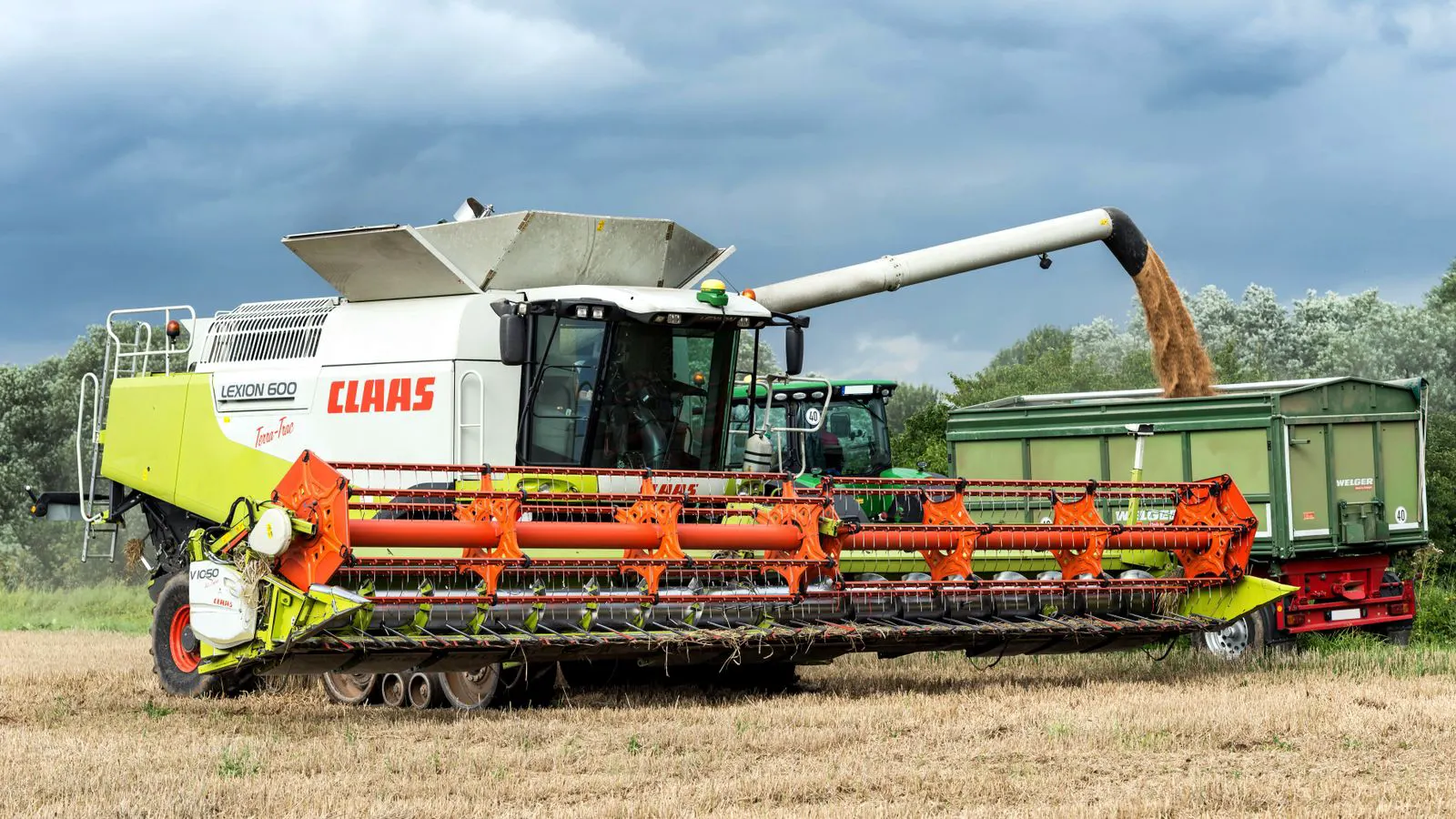
Every stop for loading grain takes time. The driver must stop the combine, open the grain tank, position the loader truck, wait for the truck to fill, and close the tank. This downtime accumulates quickly. If a harvester works an eight-hour day, and it stops ten times for loading, that is a significant portion of the day lost. A larger grain tank reduces the number of stops. Fewer stops means more time spent cutting and threshing.
However, there is a limit. If the tank is so large that it takes a long time to fill, the driver is waiting. The loader truck may be full and ready, but the combine is still running. This mismatch causes idle time for both machines. The ideal tank size keeps the loader truck and the combine in a balanced rhythm. The truck should be ready to load just as the tank approaches capacity. If the truck arrives early, it waits. If the tank is full before the truck arrives, the combine stops.
Evaluate your transport fleet. How many trucks do you have? How large are their grain bins? A small truck with a 20-ton bin may not be able to empty a 30-ton tank in one trip. This forces the driver to make multiple passes or wait for another truck. Match the grain tank capacity to the loading truck capacity. This alignment reduces waiting time and maximizes the efficiency of both machines.
Weight, Fuel Consumption, and Field Conditions
Adding grain to the tank increases the total weight of the machine. A grain harvester carrying a full tank weighs significantly more than an empty one. This extra weight affects several operational aspects. It increases fuel consumption, especially on uphill grades or in soft soil. It can cause wheel tracks or tire imprints to deepen, leading to field compaction. In some cases, the added weight may cause the machine to tip if the ground is uneven or if the operator turns sharply at speed.
Before selecting a large tank, check the machine’s maximum operating weight. The manufacturer specifies the weight limit for the engine, transmission, and structural frame. Exceeding this limit can damage components and void warranties. Some machines offer different tank sizes. The larger tank may be a heavy-duty option with reinforced mounting points. The smaller tank is lighter and may allow for a more compact machine.
Consider your field conditions. If you harvest in wet soil, a lighter machine is advantageous. It sinks less and causes less damage. If you harvest on firm, dry ground, the weight difference is less critical. In soft conditions, a smaller tank may be the better choice, even if it requires more stops. The cost of soil compaction can exceed the cost of extra loading time. Compacted soil reduces future yields and increases the fuel needed for tillage equipment.
Crop Type and Moisture Considerations
The density of the grain affects how much the tank holds. Wheat, corn, soybeans, and other crops have different densities. A tank that holds 50 tons of wheat may hold less for a lighter crop. Moisture content also plays a role. Dry grain is lighter than moist grain. If you harvest at high moisture, the tank may not reach its rated tonnage. This can lead to overestimating the number of stops needed.
Check the density of your primary crop. Look up the bulk density in kilograms per cubic meter. This value varies by crop and moisture level. Use this value to calculate the actual tonnage the tank will hold. A 1000-liter tank of wheat at 800 kg per cubic meter holds 800 kg. The same tank of corn at 750 kg per cubic meter holds 750 kg. These differences may seem small, but they add up over a full season.
Moisture content also affects the loading process. High-moisture grain can be sticky and difficult to load. It may bridge in the tank or the truck bin. This can slow down the unloading time. Consider the moisture levels in your region during harvest. If your grain is typically moist, factor in extra time for loading. This may justify a slightly smaller tank to reduce the load per stop.
Balancing Tank Size with Machine Configuration
The grain tank is not just a container. It is part of the machine’s structure. Some harvesters have fixed tanks. Others offer removable or adjustable tanks. A fixed tank is simpler and cheaper. A removable tank allows you to change the size depending on the crop or field. This flexibility can be valuable for large-scale operations that harvest multiple crops.
Consider the unloading mechanism. Some machines have a side unloading auger. Others have a rear unloading auger. The position of the auger affects how the truck approaches the combine. A side unloader allows the truck to approach from the side. A rear unloader requires the truck to approach from behind. The tank size must fit within the machine’s overall dimensions. A larger tank may extend the machine’s length or height. This can affect maneuverability in tight spaces, such as between rows or in narrow access roads.
Look at the machine’s total length and width. A large tank may make the combine wider, requiring more space for turning. It may also increase the height, affecting clearance under low-hanging trees or overhead wires. Measure your access routes. Check for obstacles. Ensure the machine with the selected tank size can move freely through your fields and access roads.
A Practical Comparison of Tank Sizes
The following table outlines typical scenarios for large-scale operations. The values are general estimates. Actual numbers vary by machine model and crop type. Use this table as a starting point for your own calculations.
| Scenario | Field Size (Hectares) | Expected Yield (Tons/Hectare) | Haul Distance (Meters) | Recommended Tank Size (Tons) | Reasoning |
|---|---|---|---|---|---|
| Small Compact Field | 50 | 8 | 200 | 10-15 | Short haul, small field, fewer stops needed |
| Medium Flat Field | 150 | 7 | 800 | 20-25 | Moderate haul, balanced stops and weight |
| Large Long Field | 300 | 6 | 1500 | 30-40 | Long haul, large field, maximize tank size |
| Multiple Small Fields | 100 (total) | 9 | 300 | 15-20 | Frequent moves, medium haul, moderate tank |
| Remote Large Field | 500 | 5 | 2500 | 35-45 | Very long haul, low yield, large tank |
Use these numbers as a guide. Adjust them based on your specific conditions. If your haul distance is longer than 1500 meters, lean toward the larger end of the range. If your field is smaller than 50 hectares, lean toward the smaller end. The table does not account for crop type or moisture. Add those variables to your calculation.
Final Checklist for Selecting Grain Tank Capacity
Before making a decision, run through this checklist. It ensures you have considered all the factors that affect grain tank capacity.
- Calculate the total expected yield for your largest field.
- Measure the haul distance to the unloading point.
- Determine the number of stops for a standard tank size.
- Check the maximum operating weight of the machine.
- Verify the loading truck capacity and approach angle.
- Consider the moisture and density of your primary crop.
- Review the field conditions and soil type.
- Ensure the machine dimensions fit your access routes.
- Compare the cost of extra stops versus the cost of added weight.
- Select a tank size that balances these factors.
If you are still unsure, start with a medium-sized tank. You can always add a second truck to reduce stops. It is harder to reduce the size of a fixed tank. A flexible option, such as a removable tank, may be worth the premium. The goal is to find the balance that maximizes your daily output without compromising the machine or the field.
Understanding the Long-Term Value
The grain tank you choose today will serve you for years. It is a major capital investment. Do not rush the decision. Gather data from your previous seasons. Track your loading times. Measure your haul distances. Note the fuel consumption with a full tank. Use this data to make an informed choice.
A well-chosen grain tank reduces operational stress. It allows the operator to focus on cutting and threshing. It keeps the transport fleet moving. It protects the field from unnecessary compaction. It fits the machine’s design limits. These benefits add up over many seasons. The right tank size is not the largest available. It is the size that works best for your specific operation. Take the time to calculate. Take the time to plan. Make the choice that serves your harvest.
Frequently asked questions
How do I calculate the exact grain tank capacity I need?
Multiply your field area by the expected yield per unit area. Then divide that total by the number of stops you are willing to make. The result is the approximate capacity you need.
Is a larger grain tank always better for large-scale operations?
No. A larger tank adds weight, increases fuel use, and can cause field compaction. It may also take too long to fill, causing idle time. Match the tank to your haul distance and field size.
What is the difference between a fixed and a removable grain tank?
A fixed tank is permanent and usually cheaper. A removable tank can be swapped for a smaller or larger size depending on the crop or field. Removable tanks offer more flexibility.
How does crop moisture affect grain tank capacity?
Moist grain is lighter than dry grain. A tank may not reach its rated tonnage if the grain is wet. Factor in the moisture content when calculating the number of stops.
Can I increase the grain tank size after purchasing the machine?
Some machines allow for upgrades, but this depends on the model and the manufacturer. Check the service manual for compatible options. Always ensure the upgrade does not exceed the machine's weight limits.